








Mrs. B’s Favorites, Media Center, Eastern Middle School, Greenwich, Connecticut,
February’s Good Reads (February 2007)
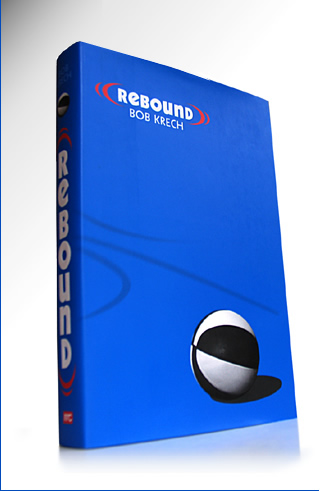
Add this one to your list of fantastic sports books! Raymond Wisniewski (heaven know I’ll mangle that name when I booktalk this) loves playing basketball. But in his town, the Polish kids all wrestle, and the black kids play basketball. Ray loves the game, though, and tries out for his high school team three years running. He’s cut the first two years, but continues to play in the town leagues to better his game. The third year, there’s a new coach—and Ray is one of the two white kids who make the team. This isn’t just about the underdog making the team and showing he can play on the court. Ray learns a lot about how prejudice isn’t predictable, good friends can become mean people, the loveliest girl can be nasty ugly inside, and your worst enemy can be an unlikely savior. An amazing story.
Instructor Magazine (August 2007)
Best Books on Friendship for Tweens
Why We Like It: The author is a teacher! And it’s a sensitive but fast-paced
story about a white high school basketball player on an all-black team. It Gets
Kids Talking About: Racial and class differences, friendship on sports teams.
-Hannah Trierweiler
Book Notes – The Princeton Packet, Princeton, New Jersey
(January 2007)
“Rebound Resounds with Truth”
When a friend writes a book, we rejoice. Our inclination is to like the book.
How wonderful to read it and realize we love the book––independent of our association
with the author. REBOUND (Marshall Cavendish, 2006) has attracted national attention
with strong reviews and a coveted nomination as a Best Book for Young Adults
by the American Library Association. The ALA BBYA finalists will be announced
later this month. REBOUND is a strong contender. The setting for REBOUND could
be any racially mixed community. In the culture of this town, the white kids
wrestle and the black kids play basketball. But Raymond Wisniewski––a scrawny
white kid form the Polish neighborhood––wants with all his being tp play basketball
on the high school’s varsity team that is dominated by black players. The white
counselor/coach who makes excuses and breaks all the rules to accommodate the “poor
black kids” won’t give Ray a second look at tryouts. But when a tough black coach––who
doesn’t bend for anyone––takes over, Ray makes the team. He learns, however,
his real challenge will be how to make it as a player. Krech is to be commended
for writing a refreshingly realistic story of racial prejudice. He has white
kids who are racists and black kids who are too. His Polish protagonist is truly
not, but offends friends in the white and black worlds as he tries to live in
both. REBOUND offers opportunities for rich conversation between teens of all
ages and their adult reading partners. Ultimately the essential question––as
posed by Coach T near the end of the book––is “Who defines us?” Ray’s struggle
to be on the team becomes more than just playing a game. With courage and grace,
Ray finds and defines himself. Bob Krech writes with courage and grace. He is
to be applauded for writing truly realistic fiction that captures the shades
of gray in a society that finds it must be defined beyond black and white. -Dr.
Joan Ruddiman
School Library Journal (December 1, 2006)
Gr 9 Up – Ray Wisniewski loves basketball. However, at his New Jersey high school,
the Polish boys are expected to excel at wrestling while basketball is left to
the black kids. Initially, he struggles to make the team, attributing his failures
to the fact that he is white. Once he makes it, he has trouble integrating with
his mostly African-American teammates as well as some discomfort at home with
the racist attitudes of his family and friends. The story ostensibly follows
Ray from his sophomore through his senior year. Unfortunately, his sophomore
and junior years are covered in one chapter each, creating a rather jerky pace.
The central conflict is never entirely clear, though in the end one realizes
that this is because Krech has attempted to show how prejudice motivates almost
all of the characters in one way or another. The conclusion ties up all the racial
conflict in a way that is satisfying while remaining realistic. The characters
are compelling and their dialogue, complete with all the grammatical inconsistencies
of typical male banter, rings true. The basketball action is fast paced enough
to hold the interest of reluctant readers who are fans of the sport. If Paul
Volponi’s Black and White (Viking) and Matt de la Pena’s Ball Don’t Lie (Delacorte,
both 2005) are popular, it is likely that Rebound will also be well received.
While not a first purchase, this noel will find an audience.
-Kristin Anderson,
Columbus Metropolitan Library System, OH
More




©2009 Bob Krech. All Rights Reserved.
